Procedure names are useful preparation for a consultation, but they do not establish which treatment is suitable for you.
Choose only after an individual assessment and an informed discussion with your surgeon.
Ask how your eye measurements, prescription, eye health and daily activities affect the recommendation. The purpose of this guide is to help you prepare questions, not select a procedure without an examination.
The procedure overview below is supported by the Royal College of Ophthalmologists’ patient information. Your surgeon should explain how these options apply to your examination.
Planning the trip around it? Start with Planning a Trip to Korea for LASIK — the contact-lens rule alone catches most people out.
The short version
| Procedure | Discussion point |
|---|---|
| LASEK / PRK | Surface treatment; ask about eligibility and recovery |
| LASIK | Corneal flap; discuss benefits, risks and aftercare |
| SMILE | Lenticule removal; discuss suitability and limitations |
| SMILE Pro | Ask which platform is proposed and why |
| ICL | Implanted lens; discuss intraocular risks and follow-up |
LASEK / PRK — the surface option
What it is: a surface laser treatment reshapes the cornea after the surface epithelium is removed or handled according to the technique. It does not create a LASIK flap. Ask which surface technique is proposed and how it affects your aftercare.
What to ask: whether a surface procedure is appropriate for your measurements, health and activities. Thin corneas or contact sports alone do not establish eligibility.
Discuss recovery before committing. Ask about discomfort, useful vision, follow-ups and the longer-term recovery expected for your own eyes.
Ask whether your available travel dates allow the required care. Do not assume a ten-day visit or a few quiet days is enough.
LASIK — the established one
What it is: a thin flap is created in the cornea, lifted, the tissue underneath is reshaped by laser, and the flap is laid back down.
What to ask: why LASIK is being recommended over the alternatives for your measurements, and which risks and follow-up needs matter to you.
The trade-offs: discuss dry eye, visual symptoms and flap-related considerations with your surgeon, including how your activities affect the recommendation.
Compare itemised written quotes rather than assuming LASIK is the cheapest option at every clinic.
SMILE — flapless, through a small incision
What it is: the laser shapes a small lens-shaped piece of tissue (a lenticule) inside the cornea, and the surgeon removes it through an incision of a few millimetres. No flap.
What to ask: how a flapless procedure changes the benefits, risks and follow-up plan for your eyes. Flapless does not mean risk-free.
Dry-eye symptoms or screen-heavy work do not by themselves establish that SMILE is appropriate. Discuss those symptoms during the assessment.
The trade-offs: ask which prescriptions the proposed device and treatment are approved for, whether your measurements fit, and how additional treatment would be considered if needed.
SMILE Pro — the newer generation
What it is: a newer equipment platform used for SMILE. Ask which device and treatment are proposed rather than relying on a marketing label or a quoted laser time.
What to ask: what the platform changes for your case, including limitations and aftercare. A shorter laser step does not establish a shorter recovery.
Is it worth the price difference? Compare the actual itemised quotes and ask what clinical benefit is expected for your eyes. Do not assume the newest platform is the best choice.
ICL — a lens inside the eye
What it is: rather than reshaping the cornea at all, a soft implantable lens is placed inside the eye, behind the iris and in front of the natural lens. Sometimes called a phakic IOL or PIOL.
What to ask: whether an implantable lens is appropriate after a full assessment. Corneal thickness or prescription strength alone cannot establish eligibility.
Removal is not a simple reversal. A phakic lens may be removed or exchanged, but that requires another operation with its own risks and does not guarantee restoration of your original vision.
The trade-offs: this is surgery inside the eye. Discuss potential vision loss, pressure changes, cataract and additional surgery with the surgeon. See the FDA’s phakic-lens risk information.
Toric ICL is the version that also corrects astigmatism.
What actually decides it
Ask what the examination covers and why each test matters. Appointment duration alone does not establish quality or suitability.
Corneal thickness. Ask how your measurements affect the options and whether any proposed procedure is inappropriate.
Prescription strength. Ask how your prescription and corneal measurements affect the proposed treatment and its limitations.
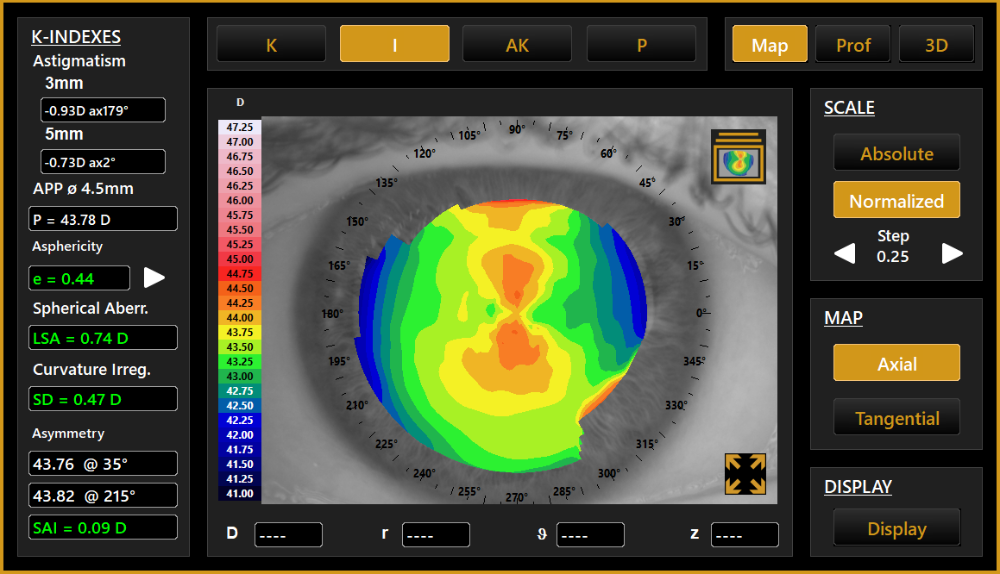
Corneal shape. Ask what the scans show and whether an irregularity or suspected corneal condition makes a procedure unsuitable.
Additional screening. Ask whether your history or examination indicates a need for further tests, including inherited corneal conditions. Do not treat a test package as a substitute for clinical assessment.
Tear film quality. Discuss dry-eye symptoms, evaluation and management before deciding on a procedure.
Vision in dim light. Discuss your existing night-vision symptoms and the possibility of glare or halos after treatment.
Your life. Describe sports, work conditions and screen use so the surgeon can discuss suitability and activity restrictions.
Ask for an explanation of the recommendation based on your examination, with time to discuss alternatives and decide without pressure.
What it costs in Korea
Current clinic-specific prices have not been verified for this article. Request a dated, itemised quote for the exact procedure and whether it covers one or both eyes.
| Quote item | What to confirm |
|---|---|
| Procedure | Exact technique and device or lens; one or both eyes |
| Tests and medication | Included items and additional charges |
| Follow-up | Visits in Korea and care after departure |
| Additional treatment | Policies, eligibility and charges |
| Travel changes | Accommodation, cancellation and contingency costs |
Confirm the quote date, currency, validity period and cancellation terms before paying.
Compare the total cost of treatment, tests, medication, follow-up, travel and possible changes to your stay. Do not assume treatment in Korea will cost less than care in your home country.
Recovery, compared
| Milestone | Question for the surgeon |
|---|---|
| Useful vision | What variation should I expect in my case? |
| Daily activities | Which activities require clearance? |
| Departure | When may I travel and what follow-up is needed? |
| Longer-term care | Who should I contact for persistent or worsening symptoms? |
Use these questions to discuss your individual plan. Useful vision, activity clearance and stable vision are different milestones.
Ask separately about swimming, saunas, eye makeup, exercise and departure. Read the Seoul activity-planning guide after eye surgery as a checklist, not a clearance timetable.
Questions worth asking at your consultation
- How long is the examination, and how many separate tests does it include?
- Does my history or examination indicate additional testing for corneal conditions?
- Which alternatives are appropriate, including options this clinic does not offer?
- Based on my measurements, why this procedure rather than the alternatives?
- What’s my corneal thickness, and how much will be left afterward?
- What’s the enhancement policy if I need a touch-up later, and what does it cost?
- What follow-up do you want after I fly home, and can you review results remotely?
A clinic that answers these specifically, with reference to your own scans, is a different proposition from one that answers in brochure language.
Frequently asked questions
Which is better, LASIK or SMILE? Neither is universally better. Ask why the proposed procedure is suitable for your examination results, goals and risk tolerance.
Is SMILE Pro worth the extra cost? Ask which platform is proposed, what it changes for your case and what the quoted fee includes.
Who should get ICL instead of laser surgery? Only an individual assessment can establish eligibility. An implantable lens has a different risk profile and may require further surgery; removal is not a guaranteed reversal.
Can I choose which procedure I get? Only among the ones you qualify for. Corneal thickness, prescription, corneal shape and dry eye determine your options before preference enters the picture.
What is the cheapest vision correction in Korea? This article does not have verified current clinic prices. Compare complete quotes and clinical suitability, not an advertised starting price alone.
If you’re planning this around a trip
The procedure decision belongs to you and your surgeon. Use UnSeoul’s informational guides to prepare questions about travel logistics and follow-up care.
More on the process and choosing a clinic: Medical travel information in Seoul
Medical information here is general and drawn from published sources. It is not medical advice and cannot substitute for an examination. Candidacy, outcomes and recovery vary by individual, and your surgeon’s assessment takes priority.
Editorial corrections checked: 4 November 2026. No individual clinical review has been completed for this article.
Recovery guidance: FDA: before, during and after LASIK. Contact your eye doctor promptly for worsening vision, severe pain or other concerning symptoms. Travel suggestions here are editorial, not medical clearance.