I’m Bae, a Korea travel guide and the creator of BaeTrip Korea. Here’s how to use a Korean jjimjilbang, with a look inside from my own visit.
Let me show you around. In my video, you’ll see me sorting out the lockers, changing into spa clothes and stopping for snacks.
START HERE
If you use the baths, you’ll undress in the separate changing room and enter the bathing area without clothes. In the shared jjimjil rooms and lounge, you wear the spa outfit. At the entrance, get your ticket and locker key, put your things away and change. Wash before getting into a bath, and pay for any extras before leaving. A small bag with fresh underwear, toiletries and a way to pay is enough to start; check whether your ticket includes clothes and towels.
There’s plenty to do between the hot rooms, from folding a towel hat to stopping for eggs and noodles. I’ll walk you through where to change, what to take with you and how to settle up when you’re ready to leave.
What do you wear at a jjimjilbang?
A jjimjilbang (찜질방, approximately “jjim-jil-bahng”) is often called a Korean sauna or Korean spa in English. Think baths, heated rooms and somewhere to sit down and relax. Larger places add restaurants and games; smaller ones keep things simple. The part to understand before you arrive is the split between the bathing area and the shared, clothed area.
| Space | What to wear | Who uses it together? |
|---|---|---|
| Changing room and lockers | Change out of your outdoor clothes here. Keep your belongings in your assigned locker. | Follow the facility’s separate changing-room signs. |
| Showers and shared baths | Normally nothing: underwear and swimsuits stay outside the bathing area. Wash and rinse before soaking. | Bathing sections are separated; check children’s access rules. |
| Dry jjimjil rooms and shared lounge | The facility’s T-shirt and shorts or other designated spa outfit. | Usually shared by couples, friends and families. |
| A separate swimming pool or water park | Its own swimwear rules apply. | Check the pool ticket and access rules separately. |
One word you may also see is 목욕탕 (“moh-gyok-tahng”), meaning public bathhouse. If you want the shared lounge and heated rooms, make sure the place has a jjimjil area and that your ticket includes it. A “sauna” sign alone doesn’t tell you the whole setup. And if the complex also has a swimming pool, its swimwear rules are separate from the nude baths.
Not comfortable with the baths? Ask whether you can just use the clothed areas. You’ll usually still change in a shared locker room, so ask about a private changing space before paying if that’s a concern. You can also keep your visit to the lounge and skip the hot rooms.
A few things to check before you go
Before putting a jjimjilbang into your day’s route, look up the exact branch and its Korean name. I’d check these details on its website or with the front desk:
- Can you get in when you arrive? Check opening hours, last admission and any cleaning closures. Leave yourself time to enjoy the place before it closes.
- What are you paying for? Check baths, jjimjil rooms, clothes and towels, plus when your time starts and what happens if you stay longer.
- Can you bring your bag and use your card? A suitcase may need separate storage. Ask about overseas cards and any ID or booking requirement for foreign visitors; carry some won as a backup.
- Does it work for everyone coming? Check children’s access and supervision rules, clothing sizes and tattoo restrictions.
- Staying late? Check the overnight questions below before planning to sleep there.
What does it cost? An example from Aquafield Goyang
For a concrete budget, Aquafield Goyang lists ₩26,000 for adults and ₩21,000 for children for up to six hours, then ₩5,000 per extra hour. Spa hours are 10:00–22:00. Those are the Goyang figures checked on 3 October 2026; select Goyang on the official page before you go, and ask about last admission if you’re arriving late.
Goyang is outside Seoul, so give it room in your itinerary. The address is Starfield Goyang, 1955 Goyang-daero, Deogyang-gu. Starfield’s Aquafield page describes the branch and its spa hours.
Can you go to a jjimjilbang with tattoos?
Don’t rule out a jjimjilbang just because you have tattoos. From what I see here in Korea, tattoos are much more familiar now, and people are more relaxed about seeing them. I wouldn’t let that worry put you off trying the experience.
The part to check is the place’s entry policy, especially if you have large or extensive tattoos. Aquafield, for example, allows restrictions for extensive tattoos and may ask you to cover them or follow staff instructions. Ask about both the baths and the clothed areas before paying. Once the venue confirms you’re welcome, you can stop worrying about the entrance and enjoy your visit.
What to bring to a jjimjilbang
You don’t need a big bag for this. I’d start with fresh underwear and a few toiletries:
- Payment: a physical card and some Korean won; booking details or ID if your chosen venue requires them.
- Fresh underwear: something dry to change into before leaving.
- A small wash kit: your preferred face wash, shampoo or other essentials, especially if the venue does not supply them. Bring a toothbrush if you plan a longer stay.
- A hair tie, if needed: keep long hair out of shared bathwater.
Check whether you’ll get spa clothes and small towels with your ticket. Bring a larger towel if you prefer one, but you don’t need to pack a whole bathroom. Children’s supplies can differ: Aquafield, for example, says children under 36 months are not issued clothes or towels and lists some towel rentals separately.
You do not need a swimsuit for the traditional nude baths. Pack one only if you also intend to use a swimming area that requires it. Leave unnecessary valuables at your accommodation.
How to use a Korean jjimjilbang, step by step
1. Get your ticket, clothes and key
At the counter, say you want to use the jjimjil area. Check the price and how long you can stay, then collect your key or wristband, clothes and towels. If the clothes come from another counter, staff can point you there.
Don’t worry if the entrance looks a little different from my video. Some places have you put your shoes away first; others give you a ticket and locker number before that.
2. Store shoes, then change
Put your shoes in the small locker near the entrance, then use the larger one in the changing room for your bag and clothes. Check the number on your key or wristband and keep it with you—at some places, the same key opens both lockers.
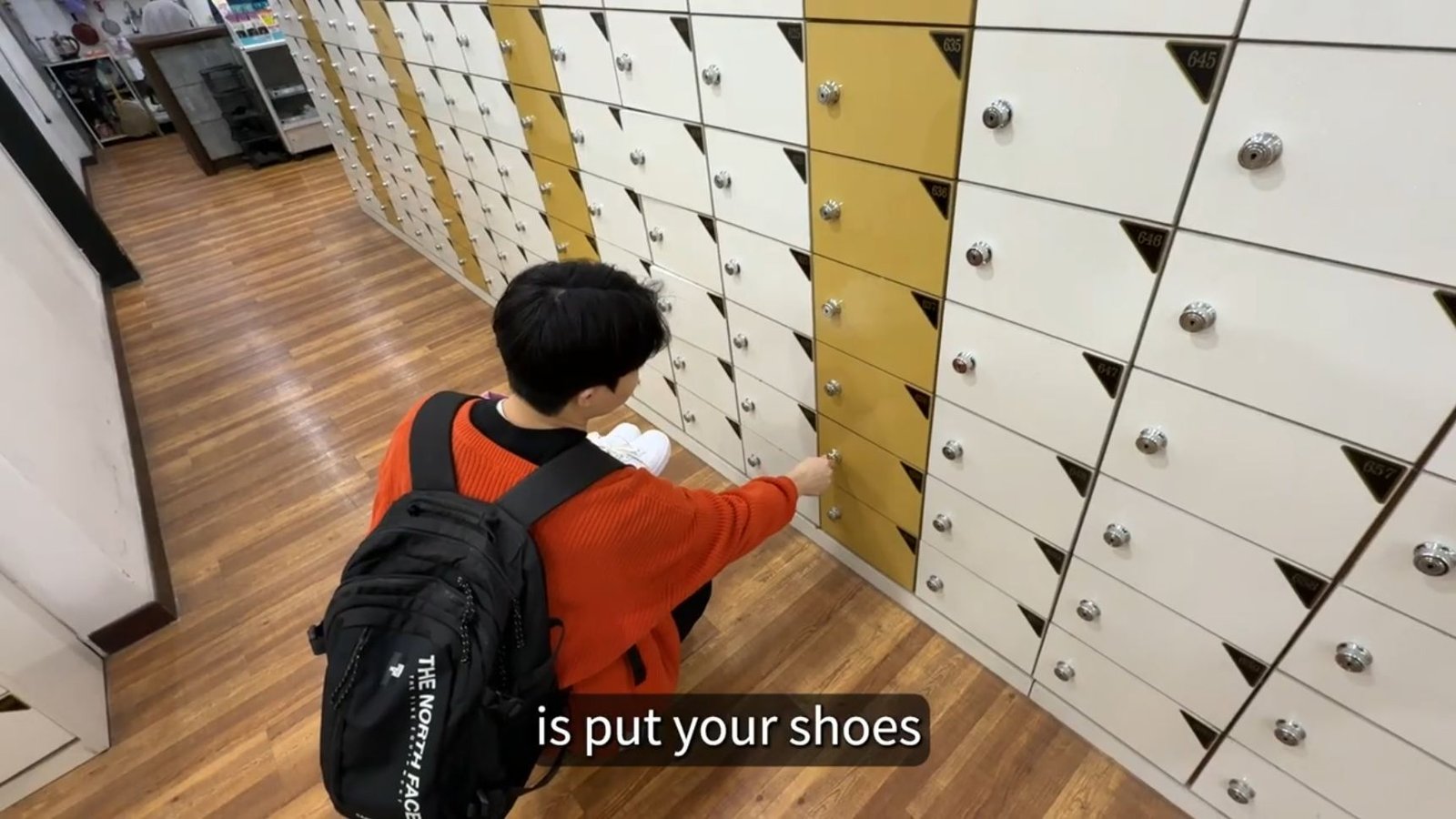
Go to the changing room indicated by staff or signs: 남 (“nahm,” men) or 여 (“yuh,” women). Ask staff if you are unsure which entrance to use. Store your bag and outdoor clothes there. If you are visiting with someone who uses a different changing room, agree on a meeting place in the clothed lounge before separating.
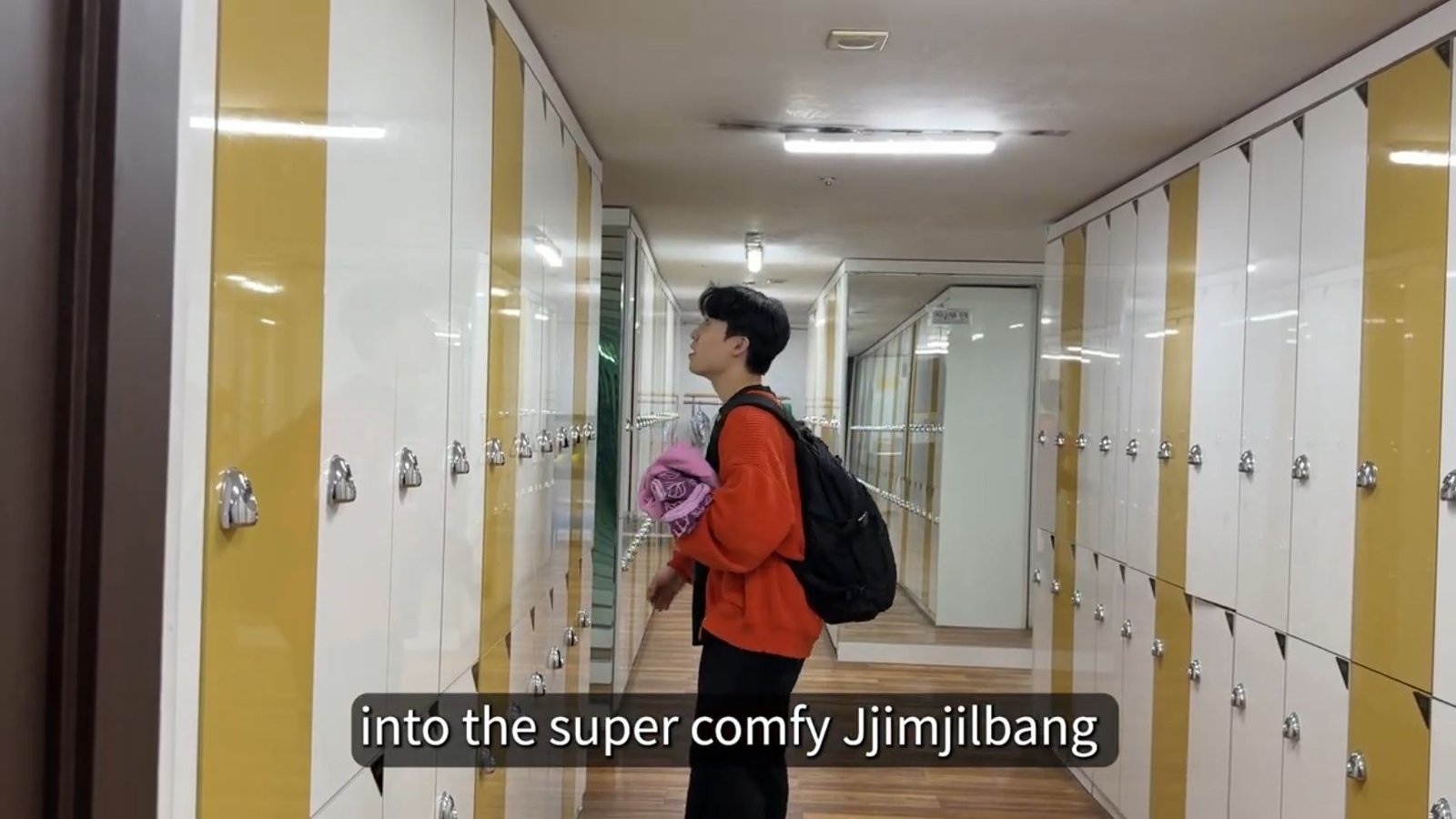
3. Taking a bath? Wash first
For the baths, leave your clothes and phone in the locker and take your washing things with you. Wash with soap at a shower station and rinse before getting into a tub. Keep long hair tied up and your towel out of the water. These are soaking baths, so keep splashing to a minimum.
You can go to the baths or the clothed areas first, following the venue’s instructions. If you skip the baths, change into the spa outfit and follow step 4. Always wash before entering a shared bath. If you go back into a bath after sweating in the dry rooms, wash again first.
4. Put on your spa clothes and head to the lounge
Dry yourself before returning to the changing area and putting on the supplied clothes. Wear clean, dry underwear beneath the outfit if that is comfortable for you. Then follow signs to the shared jjimjil floor.
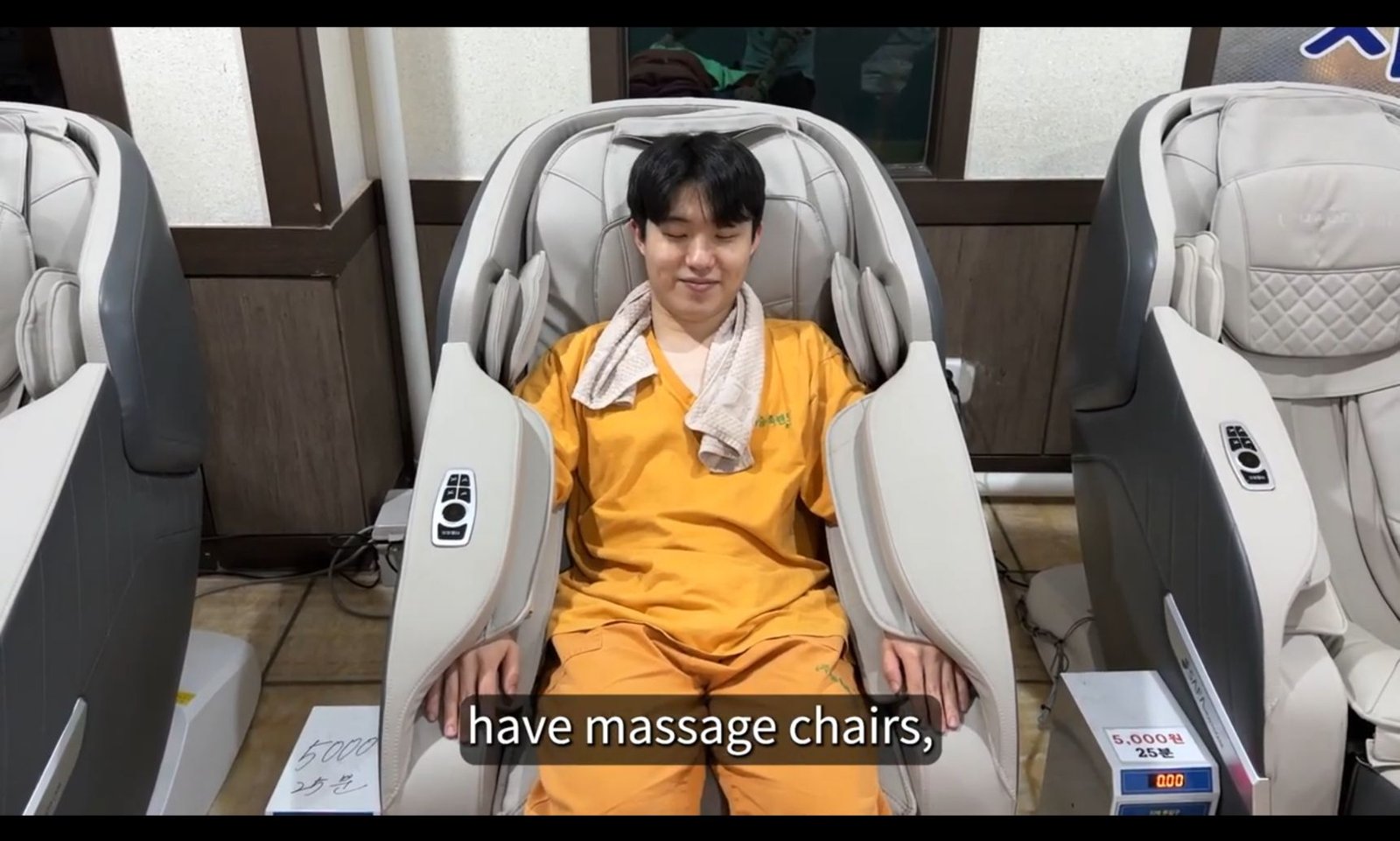
I’d take a look around before heading into a hot room. Find somewhere to sit, meet up with your friends and see what’s available. There’s no need to try the hottest room. Follow the signs, take breaks, drink water and step out if you feel uncomfortable or dizzy. Save alcohol for another time.
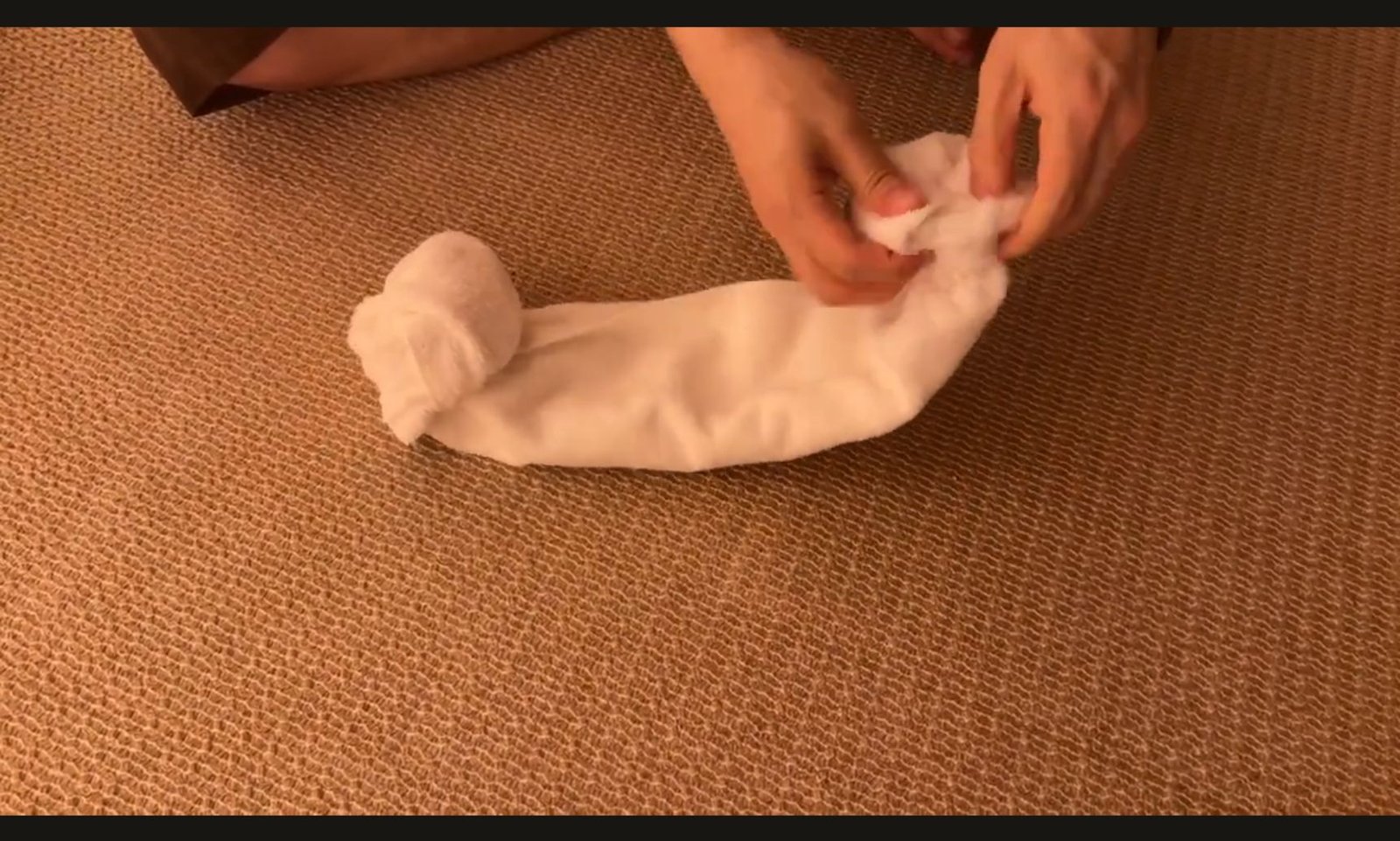
Want to try the towel hat?
You’ve probably seen this in a Korean drama. I show you how to make it in the short clip: fold the towel lengthwise into thirds, roll in both ends and adjust the middle to fit your head. Have a go if you like—it’s just for fun.
5. Enjoy food and optional extras
Here’s my snack tray: sikhye, a sweet rice drink, roasted eggs and instant noodles. If you’re wondering what to try, sikhye and eggs are an easy place to start. Have a look at the menu when you arrive; the choice will depend on where you go.
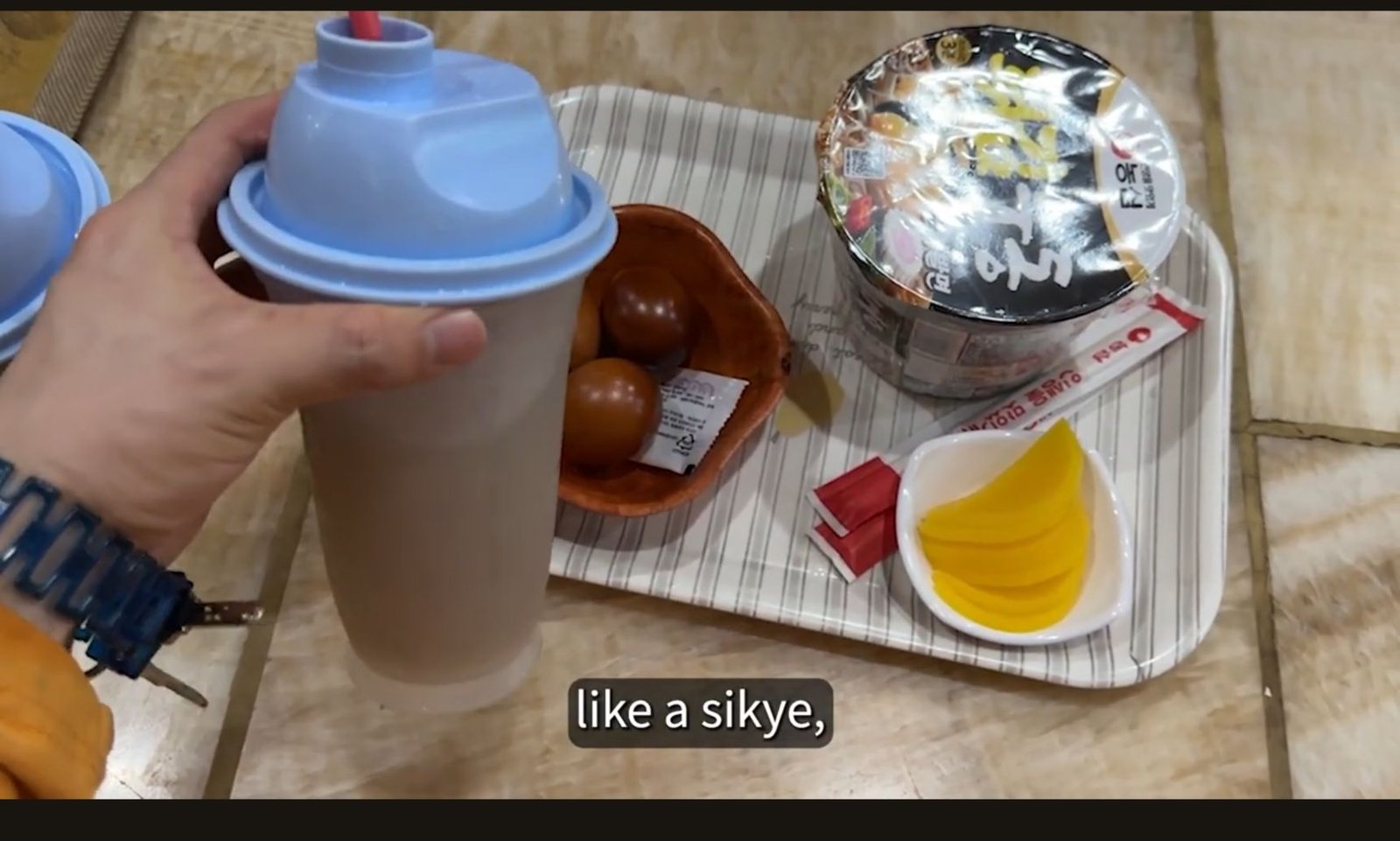
Before ordering, ask whether you pay there or put it on your locker key. If it goes on the key, you’ll settle it when you leave. Keep an eye on the food counter’s closing time, especially during an evening visit.
If you’d like a body scrub, ask about 세신 (“seh-shin”). Find out the price, what’s included and whether you need to book or wait for your turn. The attendant can explain how to get ready and when the service closes. It’s an extra you can choose, so don’t feel you need one to enjoy the baths.
Massage chairs, games and karaoke can also cost extra. Check the price and payment method before starting. For allergies or dietary requirements, ask about ingredients rather than relying on a menu picture.
6. Change, settle your extras and leave
Allow time to wash if needed, dry off and change back into your own clothes before the ticket expires. Return borrowed clothes and towels to the marked collection points. Check the clothes locker carefully for your phone, jewellery and bag.
Before you head for your shoes, take your key or wristband to the checkout counter or payment machine. This is where food, services and extra time may be added to your bill. Keep the key until you know how to open the shoe locker.
At Aquafield, everyone needs to check out—even if they haven’t bought anything—because the system also checks how long they’ve stayed. Its locker key records purchases, and the shoe locker won’t open until the bill is settled. See the operator’s One-Key instructions. Other venues may use cash or a different exit sequence.
Do not assume you can leave for dinner and return on the same admission. Ask about re-entry before going outside.
Jjimjilbang etiquette: phones, photos and shared spaces
- Put the camera away in changing rooms and baths. Do not take a quick selfie or point a translation camera at signs with other bathers behind them. Ask staff for help outside the private area.
- Ask before filming in communal spaces. Being clothed does not mean other visitors want to appear in a video. Respect no-photo signs and avoid recording people sleeping.
- Keep voices and phones quiet. Use headphones where permitted and leave calls for an appropriate area.
- Share the floor and seating. Keep walkways clear, use only the space you need and return mats or trays where directed. Eat in designated areas.
Aquafield’s published policy, for example, prohibits photography in locker rooms and its sauna area. Always follow the rules of the venue you choose.
Is this the right experience for you?
Going alone? You can take this at your own pace: a bath if you want one, a heated room and something to eat. I’d start with a short visit somewhere staff can help explain the entrance.
Coming as a couple or with friends? Choose somewhere with a shared jjimjil floor so you can spend time together. You may use different changing rooms and baths, so agree on a meeting spot before you split up.
Families: confirm the child’s age and who can accompany them into the relevant changing and bathing section. Aquafield’s policy separates these areas from age four (48 months), and children aged ten and under require a guardian. A parent travelling alone with a child should resolve that arrangement before paying.
If nudity or heat is not for you: ask about using just the clothed areas and private changing, or choose another indoor activity. Our PC bang guide explains a food-and-computer break; the National Museum of Korea guide offers a gallery-based outing without a spa visit.
Can you sleep at a jjimjilbang?
Some places allow it, but I wouldn’t build an overnight plan around a place without checking first. Ask about night admission, the time limit, bedding and when you need to leave. You may be sleeping on a mat in a shared room with people moving around or snoring. If you need a quiet night before an early flight, I’d keep your hotel booking.
Once you’ve chosen a place, give yourself a relaxed slot in your first five days in Seoul. I’d avoid squeezing it between two bookings. Leave time to get there, change and sit down for a while.
My top 3 jjimjilbang picks for a Korea trip
I’d choose based on where you’re staying and the kind of visit you want: a traditional kiln in Seoul, a modern spa near Seoul, or a bath-and-sauna break during a Busan stay. These are three places I’d put on your shortlist. Supsok appears in my video; the Goyang branch and Spa Land recommendations below are based on current official visitor information.
1. Supsok Hanbang Land — for a traditional kiln experience in Seoul
You’ll see Supsok Hanbang Land (숲속한방랜드) in the recommendation section of my video. This is the one I’d point you toward if the charcoal kilns caught your eye. It’s in Seodaemun-gu, near Sinchon, so you can try this style without leaving Seoul.
Where: 75-7 Bongwonsa-gil, Seodaemun-gu, Seoul.
Hours: Seoul’s official tourism page lists 06:30–22:00 daily, with charcoal kilns running 08:00–21:00.
Before you go: call +82-2-365-2700 for the current ticket price, included items and last admission. Check tattoo arrangements if needed. Official Seoul tourism listing.
Search the Korean name above. The translated name can be confusing: this is not Seoul Forest in Seongsu.
2. Aquafield Goyang — for a modern spa near Seoul
If you’d rather combine your spa visit with a shopping-mall day, I’d look at Aquafield Goyang (아쿠아필드 고양) in Starfield Goyang. Its themed jjimjil rooms and rest areas suit a slower afternoon. Goyang is outside Seoul, so check the journey from your hotel before choosing it.
Where: Starfield Goyang, 1955 Goyang-daero, Deogyang-gu, Goyang.
Plan for: a daytime visit; the spa is listed at 10:00–22:00. See the Goyang price and time-limit example above.
Before you go: confirm last admission and your ticket’s inclusions. Its extensive-tattoo restrictions are explained in the tattoo section. Official branch page.
3. Spa Land Centum City — if Busan is already on your itinerary
For a Busan stay, I’d shortlist Spa Land Centum City (스파랜드 센텀시티) at Shinsegae Centum City. The operator lists baths, themed sauna rooms and a relaxation area, giving you several ways to spend a few hours. You don’t need to make a separate trip to Busan just for this; it fits a day you’re already spending there.
Where: Shinsegae Centum City department store, 1F, Busan.
Hours: 09:00–22:00; last admission 21:00.
Standard admission: adults ₩26,000, students ₩21,000 for four hours; extra time ₩5,000 per hour. Spending at least ₩10,000 inside, excluding admission, extends the allowance to six hours.
Families: admission starts at elementary-school age; elementary pupils must come with a guardian of the same sex.
Before you go: ask about tattoo admission and the day’s arrangements on 1668-2850. Official Spa Land visitor information.
Details checked 3 October 2026. Pick the place that fits your route, and check its latest notice before setting out.
A few phrases to show the counter
Pronunciation is approximate. Showing the Korean text is often easiest.
찜질방은 처음이에요.
jjim-jil-bahng-eun chuh-eum-ee-eh-yo.
This is my first time at a jjimjilbang.
찜질복과 수건이 포함돼요?
jjim-jil-bok-kkwa soo-guh-nee po-ham-dweh-yo?
Are spa clothes and towels included?
몇 시간 이용할 수 있어요?
myut shee-gan ee-yong-hal soo ee-ssuh-yo?
How many hours can I stay?
정산은 어디서 해요?
jung-sa-neun uh-dee-suh heh-yo?
Where do I settle the bill?
Want to fit a jjimjilbang into your trip?
Tell me your dates, hotel area and whether you are most interested in bathing, a traditional kiln or a relaxed visit with friends. I can help you fit the experience into your route.
Sources and visit notes
Visitor details checked 3 October 2026 using the linked operator and official tourism pages. Photos are from my BaeTrip Korea video published in March 2025. Check your chosen venue’s latest hours, prices and entry rules before travelling.